When most people speak of Hebrew, the general idea is that it’s an ancient language that has been around for centuries. While this may be true, did you know that in the 20th century, no one spoke Hebrew? It’s true! The language was mostly written but never spoken.
So, who revived the Hebrew language? What is its story? Today, we’re going to dig deep and find out just how an unspoken language became popular and spoken by millions of people worldwide!
The Beginning of Hebrew
The first recorded Hebrew text comes from the time of Moses, who was born in the 14th century BCE. Moses is often described as ‘Hebrew’; the word’s meaning was derived from the word ‘Habiru’ back in the day, which was a word that was used for people who offered their services for hire. So, no one’s entirely sure if Moses spoke Hebrew, but it is a firmly held belief.
What we do know is that Moses gave the world the Old Testament or the Hebrew Bible. The Hebrew Bible was written in Hebrew, but the language had no official title back in the day. It was simply known as ‘the language of the Jewish people.’
The early revelations of the Oral Torah, delivered to Moses by God on Mount Sinai, were not written down until another thousand years! While there are no remnants of the original Hebrew Bible, the oldest evidence of written Hebrew dates back to the 10th century BCE.
Hebrew soon became a literary source language that was often used by scholars. That is, until the fall of Jerusalem.
The Fall of Hebrew
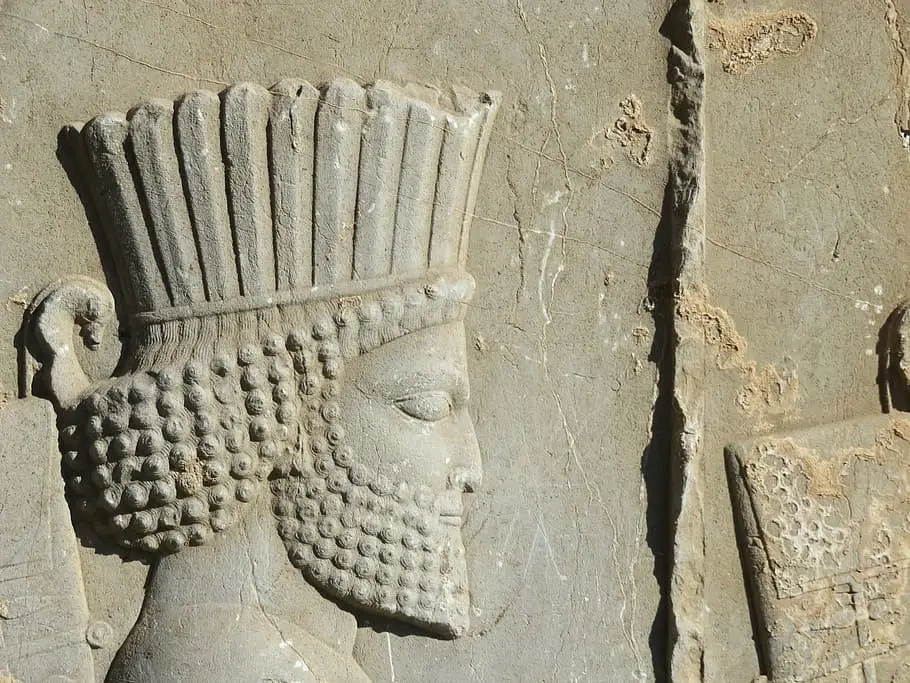
Jerusalem was rattled by the siege of the Babylonians. King Nebuchadnezzar II sent all the Jews into exile and destroyed the sacred First Temple in Jerusalem. Thankfully, his reign did not last long, and the Persian empire, led by Cyrus The Great, took Jerusalem out of the clutches of the Babylonians.
Cyrus proved to be a much more benevolent leader, ordering the Jews to build a second temple where the first temple once stood. In this period, Hebrew was still spoken but was not nearly as classical as before. In fact, a lot of words were borrowed from Aramaic, and Greek words were added to the Hebrew vocabulary. Even Jesus was said to speak Aramaic instead of Hebrew!
Unfortunately, the Persians’ peaceful reign soon came to an end with the Romans, who once again destroyed the Jewish temple. With their lives threatened, the Jewish people decided to jot down their oral traditions in the form of the Oral Torah, which is now formally known as the Mishnah.
Recommended reading: Israel Culture Shock: What You’ll Find Different Here
In an effort to save their lives, the Jewish people carried out a revolt against the Roman empire. Unfortunately, the rebellion failed miserably and put more Jewish lives in danger. So much so that many were sent to Europe. This dispersion led to a further diminishing of the Hebrew language since Jewish people now had to speak their neighbors’ languages to assimilate.
The Revival Of Hebrew

Although the exact sources of revival are still being contested, we’ll go with the closest and strongest source we have. Hebrew was modernized by the state of Israel, but how that decision came to be is very interesting.
Eliezer Ben Yehuda is the man behind the movement to revive modern Hebrew in Israel. It all started when he moved from his place of birth, Belarus, to Jerusalem. Ben Yehuda was well-read in the Hebrew Bible and had hoped to move to Jerusalem and speak only Hebrew in the Jewish settlement. However, he noticed that Hebrew was incomplete and needed significant reform to be used as a common language.
Ben Yehuda worked hard to develop a more advanced vocabulary to be used while speaking the language. He got friends and teachers on board as well! His efforts helped pick up traction for Hebrew; however, it was still a minority language.
The real event that accelerated the spread of Hebrew was the Language Wars. But don’t be fooled by the dramatic name; the event itself was quite diplomatic. The Language Wars began when the board of trustees at Israel’s first technical school wanted to make German the school’s program’s official language.
However, this decision was contested by a large majority of people. They wanted to speak Jewish languages in a Jewish school. The protests were overwhelming for the board of trustees, and soon a movement for widespread Hebrew language teaching took hold.
With migrations and Israel being established as a state in 1948, Hebrew became more widespread and is now spoken freely by the vast majority of Israeli citizens.
About The Author
Mark is a language enthusiast and history buff who learns Hebrew in his spare time at Ulpan Or, a virtual Hebrew learning language institution.