

A language as ancient as Hebrew is bound to have a lot of history tied to it. What we know as modern Hebrew today went through various transformations and movements before it became so popular.
Hebrew language and alphabet can be traced back to a thousand years ago, when they were used exclusively by Semitic people from the ancient Near East. However, before we dive into the history, let’s cover the basic elements of the Hebrew language.
Three characteristics of the Hebrew language separate it from a wide majority of non-Semitic languages. First, the script is written from right to left. Secondly, instead of the 26 letters that are used to in English, Hebrew has twenty-two. And lastly, each Hebrew alphabet has a meaning behind its name. It’s not significant to the writing, but it’s an interesting difference to note.
The Beginning
As we mentioned earlier, the first use of the Hebrew alphabet can be credited to the Canaanites’ descendants; The Phoenicians. Although many scholars also believe that Moabites, Ammonites, and Arameans also made use of the language and alphabet. The 22-letter alphabet was used in the ancient Far East, around 1300 BCE.
Keeping in line with the ever-evolving ancient world, the Phoenician branches of the alphabet soon expanded to create three distinct alphabet sets. The first was Greek, then Ancient Hebrew, and finally, Aramaic. It’s important to remember that the Hebrew we know now is vastly different from the Hebrew of ancient times. In fact, many would argue that they’re completely different languages!
This is due to the many changes that Hebrew went through. In the sixth century BCE, all ancient Hebrew letters were discarded from the language and replaced with Aramaic ones. This change has been extensively documented in the books of Nehemiah in the Bible. There are also multiple Greek sources that hold records of this language shift’s occurrence.
The Re-Write
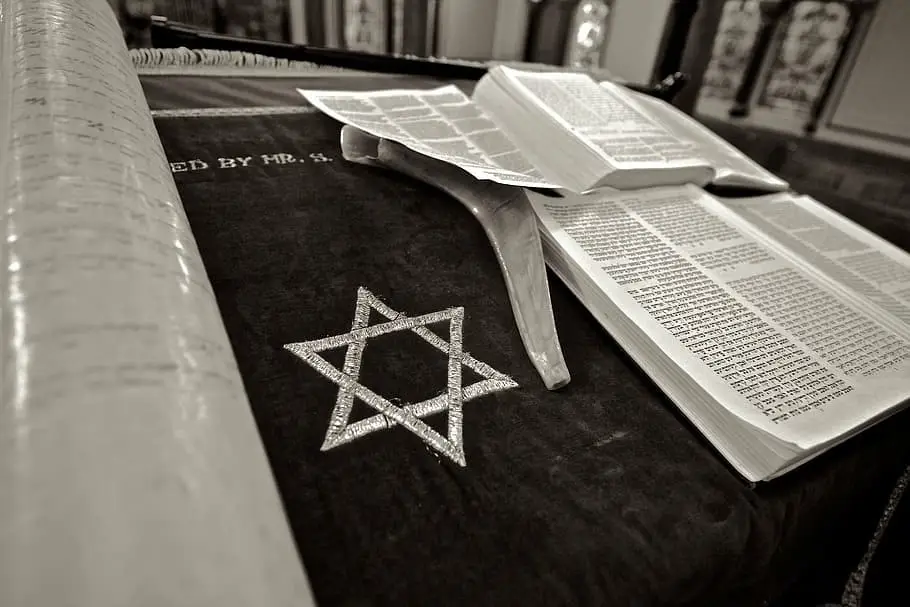
So, it’s 586 BCE, and so far, Hebrew text has been all but eradicated. This also happens to be the time period when the Babylonian empire took over Jerusalem, and the First Temple was destroyed. This siege prompted a lot of the Jewish inhabitants to leave; among them were many Jewish scholars.
The next century involved a lot of assimilation and a growing understanding of Aramaic, while people also mastered Ancient Hebrew. The Jewish people didn’t have too many reference points to study ancient Hebrew, so the Torah was used as a reliable source.
Once back from exile, Ezra, a prominent Jewish priest, and scholar hoped to become a distinguished religious and political figure in Jewish society. So, in an effort to do so, he decided to rewrite the Torah in Hebrew. However, due to the long-term effects of assimilation, much of the Hebrew that was used in the rewrite had Aramaic vocabulary included.
Recommend reading: Bible Scholarship and its Connection with the Hebrew Language
The Revival
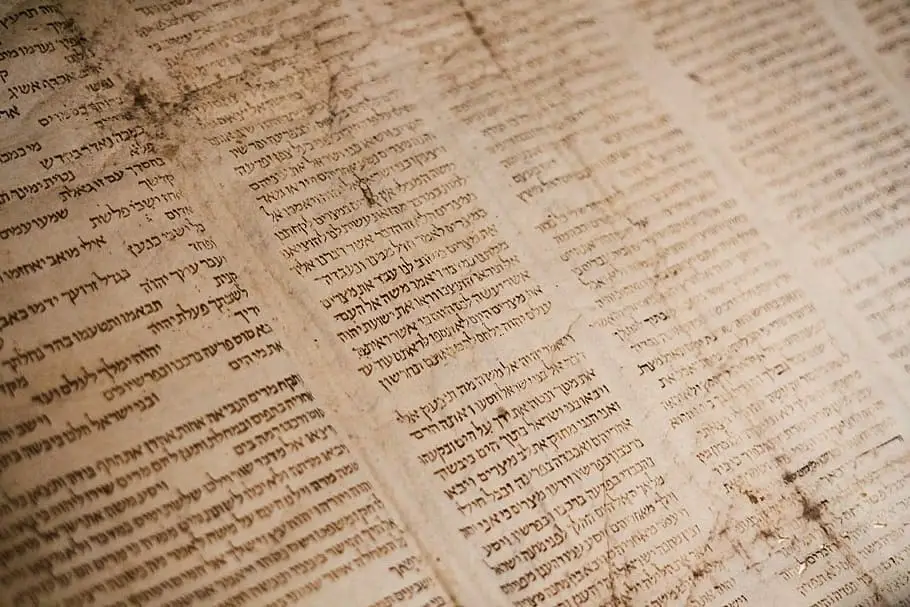
With the introduction of a newly translated Torah came the rise of Hebrew in religious services. Scholars did daily prayers and scripture interpreting in both Hebrew and Aramaic, and Hebrew soon became a prominent language in the religious community.
The practice of familiarizing yourself with a Hebrew text, even if no one spoke the language, became quite prominent for almost two millenniums. So, while it’s true that Hebrew was not as widely spoken for a long period in history, it wasn’t nearly as “dead” as many would claim!
With such a deep connection between religious practices and Hebrew, orthodox scholars were deeply against using Hebrew being included in Technion’s school education program in 1913. They considered Hebrew to be a sacred language, and the use for it anywhere outside the religious sphere was deemed vulgar.
Fortunately, their objection was not well received, as the public protested publicly! The collective uproar spread far across Israel, and students and teachers alike called for schools to be re-established with the Hebrew language. All the protests gained fruition when the board of trustees of the Technion school agreed to use Hebrew as the official learning language in 1914.
This decision became the turning point that normalized modern Hebrew as we know it and reacquainted Jewish students and teachers alike with their language. With the further migration of Jewish people back home and the assimilation with a vast majority of Hebrew-speaking individuals, Hebrew became a first or second language for nearly every citizen. In 1948 when the British mandate ended, and Israel was established as a state, 80% of the population spoke Hebrew as a first language.
About The Author
Leah is an Israeli American currently residing in NYC. She enjoys reading and exploring her Jewish culture while navigating the chaotic life of an every-day New Yorker. She has recently started taking Hebrew classes to better acquaint herself with the language through virtual classes offered by Ulpan Or, a virtual Hebrew language instruction institution.