

Square or Rounded?

Shalom,
Right after this coming Shabbat we will celebrate Shavuot – the holiday of receiving the Torah by the People of Israel.
The essence of Torah teachings and commandments has been encompassed by the Ten Commandments engraved on two tablets.
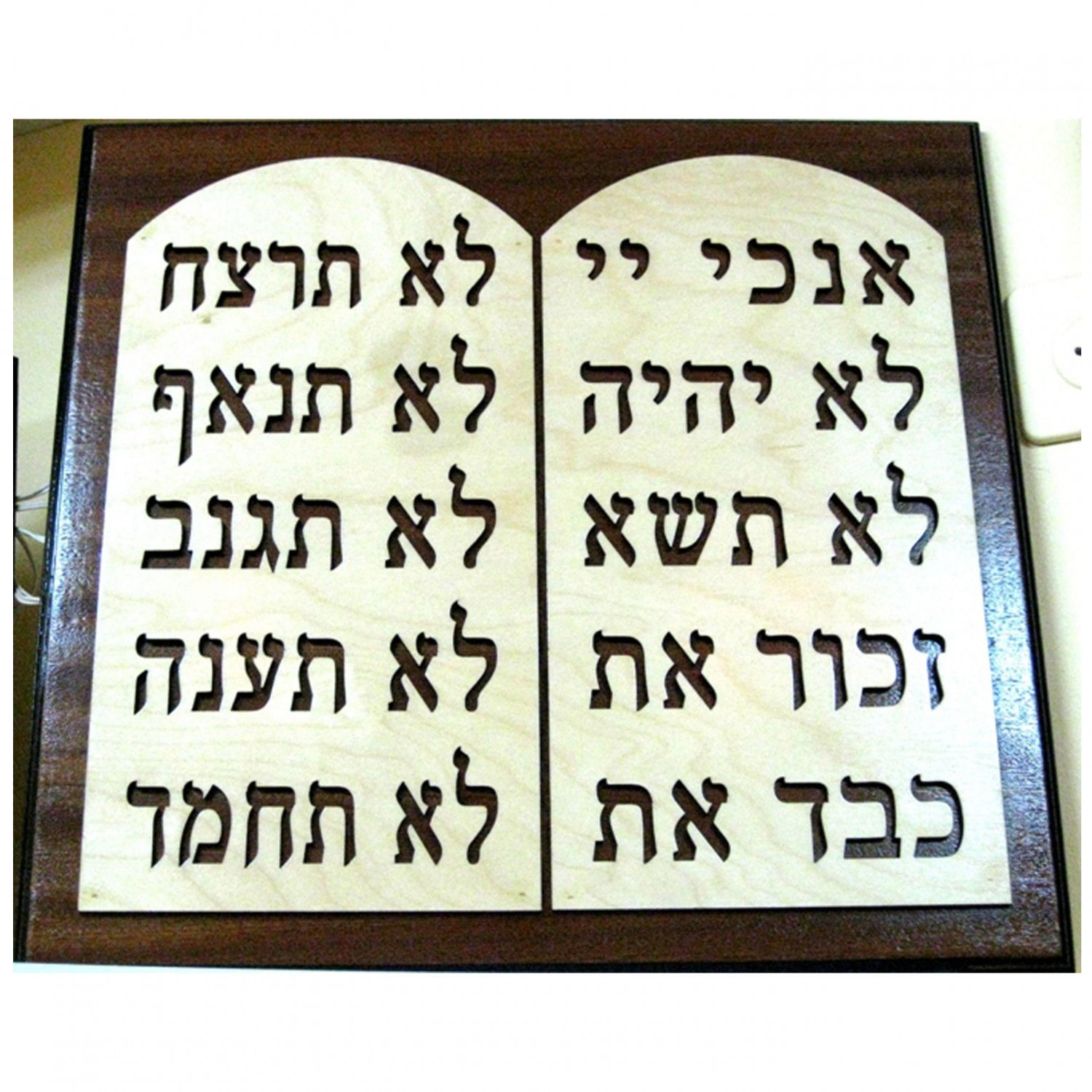
It is common to find in many synagogues and famous paintings the tablets depicted with a rounded top.
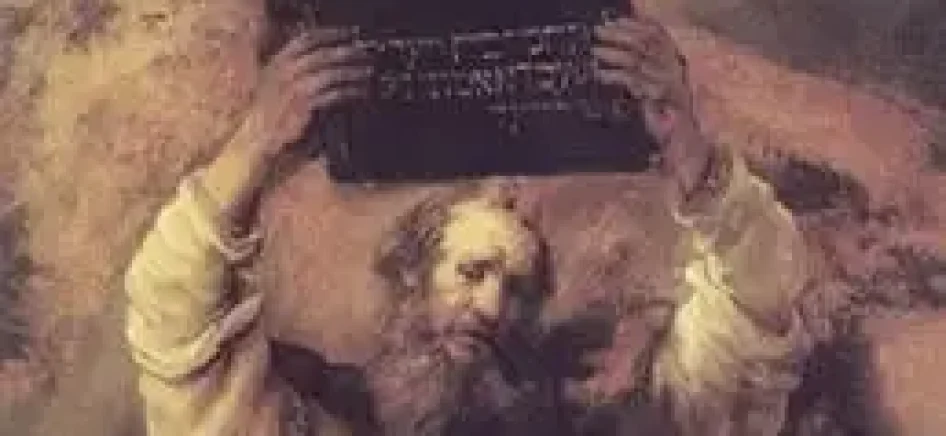
For instance in Rembrandt’s painting Moses is depicted holding rounded tablets aloft.

However, Michelangelo’s famous statue of Moses (created ~150 years earlier), shows Moses holding sharp-edged tablets under his right arm.

By the way, the sculpture actually mistranslates the Hebrew word קרן keren (which in Hebrew is both “Ray” as well as “Horn) and depicts Moses with “horns” rather than “rays” of light following his mountaintop encounter with the Lord.
So, who was right about the shape of the tablets and what does our tradition tell about it?
From the Torah we know the following:
וַיִּפֶן וַיֵּרֶד מֹשֶׁה, מִן-הָהָר, וּשְׁנֵי לֻחֹת הָעֵדֻת, בְּיָדוֹ: לֻחֹת, כְּתֻבִים מִשְּׁנֵי עֶבְרֵיהֶם–מִזֶּה וּמִזֶּה, הֵם כְּתֻבִים
וְהַלֻּחֹת–מַעֲשֵׂה אֱלֹהִים, הֵמָּה; וְהַמִּכְתָּב, מִכְתַּב אֱלֹהִים הוּא–חָרוּת, עַל-הַלֻּחֹת
And Moses turned, and went down from the mount, with the two tables of the testimony in his hand; tables that were written on both their sides; on the one side and on the other were they written.
And the tables were the work of God, and the writing was the writing of God, graven upon the tables. (Exodus 32: 15-16)
Let’s first explore the special writing on the tablets
The Torah describes the writing as “inscribed from both their sides; on one side and on the other side they were inscribed.”
This means that the inscription was engraved through and through. As such, the words were clearly legible on one side and written in mirror writing on the other.
Now there are two Hebrew letters, letter ם (final Mem letter) and letter ס (letter samakh), that are closed from all sides and there is nothing that can hold those onto the stone.
These letters, the Talmud concludes, must have been miraculously suspended in place.
Others teach that the writing was miraculously legible on each side—in other words, although the letters were engraved all the way through, they could nevertheless be read from right to left on both sides.
The most common understanding is that the first five commandments were written on one tablet, and the other five commandments were on the second.
The material of the tablets:
The tradition is that both sets of tablets were made of sapphire.
After Moses broke the first set, G‑d revealed a large deposit of sapphire under Moses’ tent.
Moses used some of the stone to carve the second tablets, and was permitted to keep the remainder.
The shape and the size
Tradition tells us that the tablets were thick square blocks of stone:
Six handbreadths tall, six handbreadths wide, and three handbreadths deep.
In modern measurements, that is roughly 18″ 18″ × 9″.
The sages of the Talmud demonstrate how tablets of this size—along with a few other relics—fit neatly into the Ark of the Covenant that Moses made.
It is interesting to note that nowhere is there any mention of them having the rounded tops that are so common in the popular drawings of Moses and the tablets.
This design appears to be attributed to non-Jewish artists.
Anyway, according to the traditional descriptions from the Talmud, one can conclude that Michelangelo had it right.
For most children and youngsters nowadays, the word tablet usually has a different connotation…
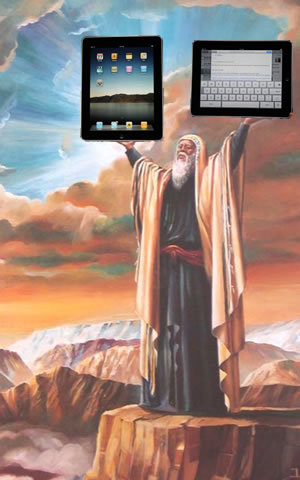
Biblical tablet in Hebrew is לוח – LUAKH
Plural – לוחות – LUKHOT
A computerized tablet (device) in Hebrew is referred as טבלט -TABLET
Plural – TABLETIM
Find more insights in our five-book series “Hebrew from Insight Out” at
https://gx210.infusionsoft.app/app/storeFront/showCategoryPage?categoryId=17
Wishing you Shabbat Shalom and Shavuot Sameach,

Yoel & Orly
Many ask us for a permission to redistribute our newsletters. By all means, please do feel free to forward this newsletter to anyone you wish!
Access the archive of our previous posts at:
https://www.ulpanor.com/category/blog/
Subscribe to our newsletters on our website at the bottom of the home page:
