The Messenger “Fails” —
Why is He Chosen Anyway

of Ulpan-Or, the International Center
for Hebrew and Israeli Culture Studies.
Hebrew at the Speed of Light!
You’re invited to a personalized conversation with Ulpan-Or’s founders—an opportunity to map out the Hebrew journey that fits you best.
Secure your place on Zoom HERE
Shalom,
Torah portion Va’era opens not with triumph, but with frustration.
Not with miracles, but with silence.
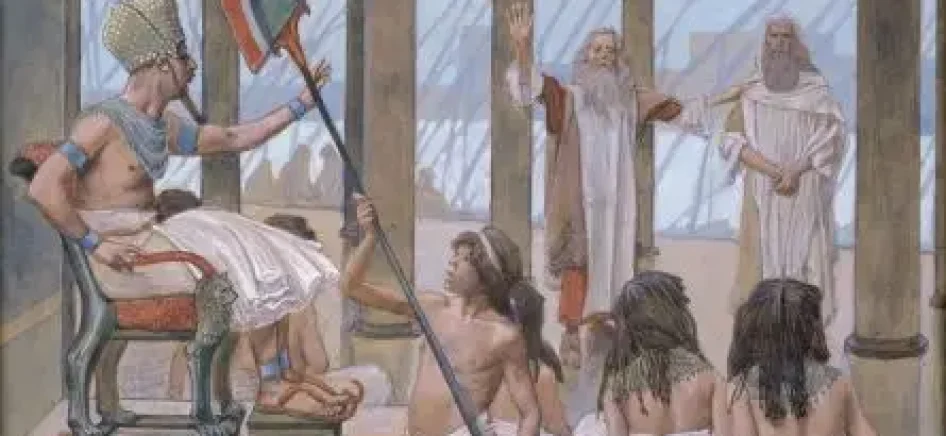
Moses has already tried.
- He stood before Pharaoh — and Pharaoh threw him out.
- He turned to the people of Israel — and they could not hear him.

The Torah says it plainly:
וַיְדַבֵּר מֹשֶׁה כֵּן אֶל־בְּנֵי יִשְׂרָאֵל
וְלֹא שָׁמְעוּ אֶל־מֹשֶׁה
מִקֹּצֶר רוּחַ וּמֵעֲבֹדָה קָשָׁה׃
“So Moses spoke thus to the children of Israel,
but they did not listen to Moses,
because of shortness of spirit and hard labor.”
(Exodus 6:9)
This verse does not accuse the people.
It diagnoses them.
They are not stubborn.
They are crushed.
When a person lives under constant pressure, the soul contracts.
There is no inner breath left for hope.
Moses Breaks
God now tells Moses: Go again. Speak again.
And Moses finally says what he has been holding inside:
הֵן בְּנֵי־יִשְׂרָאֵל לֹא־שָׁמְעוּ אֵלַי
וְאֵיךְ יִשְׁמָעֵנִי פַרְעֹה
וַאֲנִי עֲרַל שְׂפָתָיִם׃
“Behold, the children of Israel did not listen to me—
how then will Pharaoh listen to me,
and I am uncircumcised of lips.”
(Exodus 6:12)
This is not a technical complaint.
It is an existential one.
- “I don’t know how to make words enter hearts.
- I don’t persuade.
- I don’t perform.
- I don’t sell.”
What Was Moses’ Problem — Really?
The commentators offer different explanations, and together they form one deep truth.
Rashi: Moses had a real physical difficulty with speech.
Rashbam: Moses did not command the refined Egyptian court language after decades away.
Sforno: Moses could not speak the language of diplomacy — the flattering, evasive language of empire.
Different paths, same destination:
Moses was not charismatic.
Not polished.
Not rhetorically impressive.
And that is exactly why God chose him.
God’s Unexpected Strategy
God does something surprising.
He does not remove Moses.
And He does not immediately heal him.
Instead, He creates a partnership.
אַתָּה תְדַבֵּר אֵת כָּל־אֲשֶׁר אֲצַוֶּךָּ
וְאַהֲרֹן אָחִיךָ יְדַבֵּר אֶל־פַּרְעֹה׃
“You shall speak all that I command you,
and Aaron your brother shall speak to Pharaoh.”
(Exodus 7:2)
Moses will carry the truth.
Aaron will help translate it into the world.
Not because Moses is replaceable —
but because Moses is essential.
The Ran’s Radical Insight: Weakness as Proof
Rabbi Nissim of Gerona (the Ran) says something daring:
If Moses had been a brilliant speaker, history could say:
“He convinced them.”
“He manipulated them.”
“He turned imagination into belief.”
But Moses could not do that.
Which means no one can claim that the Exodus was a triumph of rhetoric.
It was a revelation.
Moses is not the spotlight.
He is the cable.
Like a hook on the wall that holds a crown —
you don’t admire the hook.
You see the crown.
That is why God wants Moses’ “heavy lips.”
So that no one confuses the messenger with the message.
A Chassidic Image
The Chassidim say:
When the king removes his crown at night,
he does not place it on another man’s head.
He hangs it on a simple nail in the wall.
Why?
Because the nail has no identity of its own.
That nail is Moses.
Why Moses Almost Disappears from the Passover Haggadah
This explains one of Judaism’s most striking facts:
Moses is barely mentioned in the Passover Haggadah.
Not because we forgot him.
But because the Haggadah refuses to let us mistake the channel for the source.
The Exodus is told as God’s act.
Moses appears once — quietly:
“They believed in the LORD and in Moses His servant.”
- A servant.
- A conduit.
- Nothing more — and nothing less.
A Word About Israel Today
This Torah portion speaks powerfully now.
There are moments when Israel speaks — and is not heard.
Explains — and is misunderstood.
Carries truths that do not “pass the screen.”
The Torah does not say: Make it more marketable.
It says: Speak again.
- Truth is not measured by applause.
- Truth is measured by fidelity.
Modern Thinkers, Same Wisdom
Modern research echoes this ancient insight:
Daniel Kahneman, Thinking, Fast and Slow:
Highly polished messaging often triggers skepticism; people sense manipulation before truth.
Chip & Dan Heath, Made to Stick:
Credibility depends less on eloquence and more on perceived authenticity.
Brené Brown, Daring Greatly:
Vulnerability is not weakness; it is the birthplace of trust.
Moses is not compelling because he dazzles.
He is compelling because he disappears.
Language That Breathes
1) קֹצֶר רוּחַ — Kotzer Ruach — “Shortness of spirit”
Hebrew: קֹצֶר רוּחַ
Transliteration: Kotzer ruach
Literal sense: “short breath / constricted spirit”
Meaning in context: emotional constriction; no inner space for hope; the heart is too tight to receive good news.
How it shows up in modern Hebrew:
אני קצר רוח (Ani k’tzar ruach) — “I’m impatient / I don’t have the bandwidth.”
A deeper nuance:
In Hebrew, רוּחַ (ruach) is not only “spirit.” It’s also “breath,” “wind,” “inner movement.”
So kotzer ruach is the opposite of redemption: redemption expands breath. Slavery shrinks it.
2) עֲרַל שְׂפָתָיִם — Aral Sefatayim — “Uncircumcised of lips”
Hebrew: עֲרַל שְׂפָתָיִם
Transliteration: aral sefatayim
Plain meaning: blocked lips; restricted speech; an inability for words to pass through cleanly.
Why use the word עָרֵל (arel), “uncircumcised”?
Because in Torah language, עָרְלָה (orlah) is a covering, a barrier, something that prevents full expression.
You see the same metaphor elsewhere:
עֲרַל לֵבָב (arel levav) — “blocked heart” (a heart that can’t receive truth) עֲרַל אָזֶן (arel ozen) — “blocked ear” (an ear that can’t hear)
So Moses is saying:
“It’s not only that I struggle to speak. It’s that my speech meets a barrier. My words cannot cross.”
3) שָׁמַע — Shama — “To hear” that really means “to accept”
In the verse it says: וְלֹא שָׁמְעוּ אֶל־מֹשֶׁה — “they did not listen to Moses.”
In Hebrew, לִשְׁמוֹעַ (lishmoa) often means more than hearing sound. It means:
to take in, to internalize, to respond, to allow the words to shape reality.
So the Torah is not describing an audio problem.
It is describing a human problem: when life is crushing, even truth can bounce off the soul.
משמעות (mashmaut) – “meaning” – derived from the root שמע
משמעותי – (mashmauti) – “meanimgful”

Closing Thought
Torah portion Va’era teaches a counter-cultural truth:
God does not redeem the world through perfect messengers.
He redeems it through faithful ones.
Sometimes, when words stumble,
truth walks in.
Shabbat Shalom,
Yoel & Orly